
 3 hours ago
1
SEE YOUR AD HERE
From growing up in a slum outside Durban to studying law in a segregated university, Navi Pillay’s experience in apartheid-era South Africa instilled in her a lifelong belief in the importance of international courts in defending people’s rights. Now she should use her newly won stature to advance the rule of law at home
- Professor Adekeye Adebajo
20 OCT 2026, 07:50
5 min read
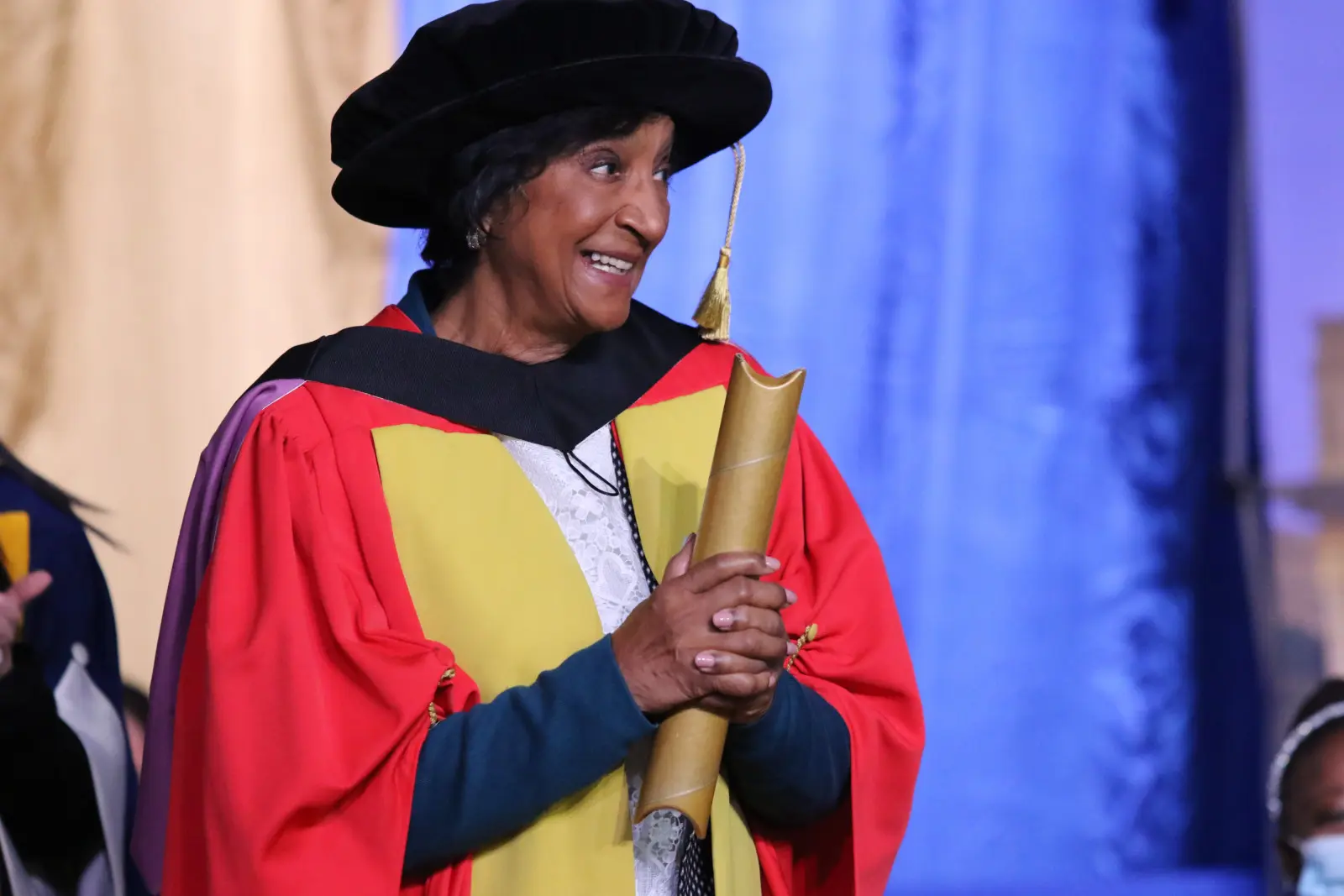
The choice of South African jurist Navanethem “Navi” Pillay for this year’s Nobel Peace Prize was a striking show of support for the rules-based multilateral system. It was also a slap in the face to US President Donald Trump, who has shamelessly lobbied for the prize while attacking the international legal order.
At a political rally shortly after the announcement, Trump dismissed Pillay as “a liberal person who works at the United Nations, who nobody has ever heard of”.
The Nobel committee was clear in its message, noting that Pillay’s “independence, expertise and steadfastness have made her one of the most respected international jurists of our time”, and warning that “a world operating without the rule of law is unjust, unwise and inhumane”. But it failed to mention Pillay’s pivotal role as the chair of the UN Independent International Commission of Inquiry on the Occupied Palestinian Territory, including East Jerusalem and Israel, in finding that Israel’s actions in Gaza constitute genocide — a reflection of her life’s work supporting the downtrodden.
Pillay, the fifth South African and the fourth African woman to receive the Nobel Peace Prize, was born in Clairwood, a slum outside Durban, during the apartheid era. The daughter of a bus driver and a homemaker, she grew up in a large, poor family of Indian Tamil origin — her grandparents came from India as indentured servants.
As a teenager, she witnessed brutal crackdowns on black protesters, recalling later that “the government was oppressive, the laws were oppressive and the courts cooperated with these laws”.
After excelling at her segregated high school, Pillay studied law at what was then the University of Natal, partly thanks to donations from her community. Despite being forced to attend night classes for black students, she graduated at the top of her class.
Pillay’s experience living in and dealing with a racist regime that used lawfare to oppress its black majority instilled in her a lifelong belief in the importance of international courts in curbing the abuses of authoritarian states. The toughness and resilience she developed served her well throughout her career.
It was fitting, then, that Pillay learnt about her Nobel win during a human-rights conference in Nuremberg, at the site where Nazi leaders were tried after World War II. Reading the transcripts from the trials helped cement her interest in international law.
After earning her degree, Pillay worked with an anti-apartheid lawyer of Indian descent, NT Naicker, before becoming the first woman to establish her own law firm in what was then the province of Natal in 1967. She made a name for herself defending imprisoned anti-apartheid activists, including Nelson Mandela, and attended Harvard Law School on a fully funded fellowship, eventually graduating with a Doctor of Juridical Science in 1988.
On her return to South Africa, she co-founded an organisation to defend women against domestic violence.
In 1995, after apartheid ended, Mandela appointed Pillay to the High Court of South Africa, where she was the first black woman to sit on the Bench and fought tirelessly for women’s rights. She joined the UN International Criminal Tribunal for Rwanda the same year and was later elected president judge, serving eight years in total.
Under Pillay’s watch, the tribunal helped criminalise mass rape and hate propaganda in the context of genocide. As she observed: “From time immemorial, rape has been regarded as spoils of war. Now it will be considered a war crime.”
In 2003, shortly after the International Criminal Court was founded, Pillay was elected as a judge and served until 2008, when she was appointed UN High Commissioner for Human Rights. The first woman from the Global South in the post, Pillay proved adept at managing the highly politicised UN Human Rights Council. During her tenure, she excoriated Myanmar’s junta for its atrocities against the country’s Muslim Rohingya minority, pushed for the recognition of preventable maternal deaths as a human-rights issue and was invited in 2011 on a mission to Israel, which praised her even-handedness on the Palestine issue.
Israel’s position changed when Pillay chaired the UN Commission of Inquiry between 2021 and 2025. The body found that Prime Minister Benjamin Netanyahu, Minister of Defense Yoav Gallant and President Yitzhak Herzog had “incited the commission of genocide”.
When the report was released, Pillay argued in The New York Times that every state has an obligation to prevent genocide using all available diplomatic and legal means. She wrote: “To do nothing is not neutrality. It is complicity.”
Predictably, Israel’s foreign ministry posted on X that the decision to award Pillay the Nobel Peace Prize was “the grotesque weaponisation of an award to legitimize anti-Israel hatred and prejudice”.
Humble, down-to-earth and a mentor to many young African lawyers, Pillay is undeniably the most distinguished South African international civil servant. As she received news of the prize, she noted: “I see this award as the voice of the majority of the world.”
A staunch defender of the “wretched of the Earth”, she was consistently on the side of the masses of those countries suffering from a grossly unjust system of “global apartheid”.
After xenophobic attacks against African migrants in Durban in 2015, she led the Special Reference Group on Migration and Community Integration in KwaZulu-Natal, which urged the South African government to “ensure that all of its policies and civil servants respect the rights and dignity of all human beings”.
More remains to be done to protect the rights and dignity of all people in South Africa, or else vigilantism — mob violence and the absence of law — will tear the country apart. The hope is that Pillay will use her newly won stature to help prevent that scenario. Project Syndicate
Professor Adekeye Adebajo is a Senior Research Fellow at the University of Pretoria’s Centre for the Advancement of Scholarship.


 English (US) ·