
 1 day ago
6
SEE YOUR AD HERE
Leaders honour those who died for democracy while pursuing stronger links in business, education and innovation
6 NOV 2026, 00:00
5 min read
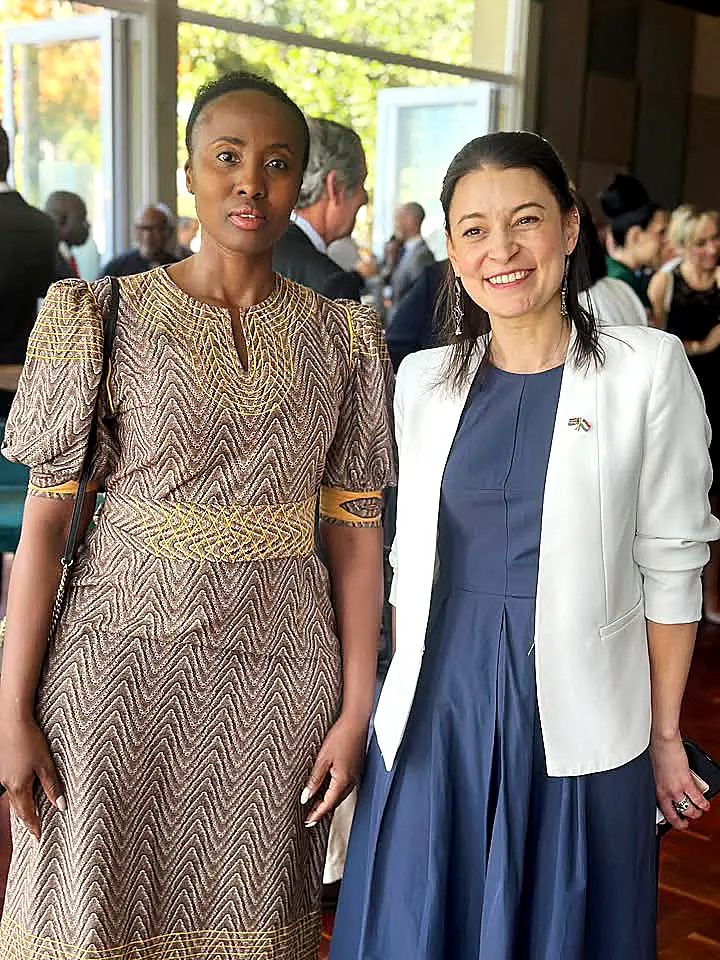
The 70th anniversary of the Hungarian Revolution and Freedom Fight of 1956 provided an opportunity to honour those who sacrificed their lives for democracy while reflecting on the enduring historical ties and growing partnership between Hungary and South Africa. The Chargé d’Affaires of Hungary, Dóra Kövendi, hosted a commemorative reception at Pretoria Country Club, bringing together members of the diplomatic corps, government representatives and distinguished guests to mark one of the most significant moments in Hungary’s modern history.
In her address, Kövendi recalled how the revolution began with students at Budapest’s universities taking their demands for freedom and political change into the streets. What started as a student demonstration quickly became a nationwide movement, with citizens joining the call for democracy and national independence.
The consequences were devastating. Thousands lost their lives, tens of thousands were arrested and approximately 200 000 Hungarians were forced to flee their homeland.
However, Kövendi emphasised that the anniversary was not only about remembering tragedy but about recognising a nation’s determination to reclaim its freedom and moral principles.
“Freedom, tolerance and democracy are not gifts available to everyone,” she said, reminding guests that those values often came at an extraordinary cost.
Drawing a meaningful parallel between Hungary and South Africa, Kövendi highlighted the remarkable similarities in the two countries’ histories. Both nations experienced periods of political oppression and ultimately pursued democratic transformation through negotiation rather than revenge.
She recalled the 1956 Women’s March to the Union Buildings in Pretoria, when approximately 20 000 women protested against apartheid legislation. She also noted that, in the aftermath of the Hungarian Revolution, South Africa welcomed approximately 1 300 Hungarian refugees, offering them shelter and an opportunity to rebuild their lives.
The two countries subsequently established full diplomatic relations in July 1991, as both were navigating significant political transitions.
Today, that historical connection provides a foundation for an expanding bilateral partnership.
Kövendi highlighted South Africa’s importance as Hungary’s leading economic partner in sub-Saharan Africa, pointing to opportunities for cooperation in water management, agriculture, food processing, medical technology, automotive components and digital solutions.
Education also remains an important bridge, particularly through Hungary’s Stipendium Hungaricum scholarship programme.
Representing the South African government, Phumzile Mazibuko, of the Department of International Relations and Cooperation, congratulated Hungary on the anniversary and reaffirmed South Africa’s commitment to strengthening bilateral relations.
She highlighted the potential for increased trade and investment, noting Hungary’s expertise in manufacturing, pharmaceuticals, information technology, renewable energy and water management. South Africa, she said, offered Hungarian businesses access to the wider African market through the African Continental Free Trade Area.
Mazibuko also praised the Hungarian scholarship programme, which has enabled hundreds of South Africans to pursue fully funded studies at Hungarian universities. With more than 300 alumni, the programme continues to build skills, strengthen academic cooperation and create lasting connections between the two nations.
Cultural and sporting exchanges were also recognised as important elements of the relationship, demonstrating that diplomacy extends beyond government engagement to the connections formed between people.
The afternoon concluded with glasses raised in a toast to continued prosperity, enduring friendship and the strengthening of the partnership between Hungary and South Africa. Seventy years after the events of 1956, the anniversary served as a reminder that the pursuit of freedom transcends borders and generations, and that shared history can provide a meaningful foundation for future cooperation. key priority, with growing inter-est from Turkish businesses in South Africa. Yıldırımgeç high-lighted opportunities in trade and investment, noting that the anticipated first meeting of the Joint Economic and Trade Commission would provide an opportunity to identify new areas of cooperation, address challenges and bring the two business communities closer. She also highlighted practical examples of cooperation that benefit communities, including Turkish biotechnology expertise contributing to animal health and food security in South Africa, as well as collaboration in the digitalisation of the taxi sector.
Beyond trade and investment, the ambassador drew attention to the shared values connecting the two nations. She made a particularly meaningful comparison between the humanist traditions of Anatolia and South Africa’s philosophy of Ubuntu, both of which place compassion, generosity, respect and human dignity at their centre.
“Our well-being is closely inked to the well-being of others,” she said, highlighting the importance of solidarity and understanding in a world increasingly affected by conflict and uncertainty.
Yıldırımgeç also addressed international challenges, including the humanitarian suffering in Gaza and Ukraine, stressing Türkiye’s belief that lasting peace required dialogue, diplomacy and respect for international law. She further looked ahead to Türkiye hosting COP31 in Antalya in November 2026, describing it as an opportunity to turn international climate commitments into meaningful action.
South Africa’s representative echoed the ambassador’s sentiments, describing the relationship between the two countries as an enduring friendship founded on mutual respect, shared values and a growing commitment to cooperation.
The address highlighted recent high-level engagements, including Deputy President Paul Mashatile’s 2025 visit to Ankara, where he co-chaired the inaugural Binational Commission. Progress in aerospace cooperation was also noted, following the signing of a Memorandum of Understanding between the South African National Space Agency and the Turkish Space Agency in October 2026.
Other areas identified for expanded cooperation included agriculture, defence, education, energy, tourism, science, technology, innovation and sports.
Türkiye’s growing engagement with Africa continent was also recognised, with the forthcoming Türkiye-Africa Partnership Summit in December expected to provide further opportunities to strengthen relationships and explore new partnerships.
As the evening concluded, guests celebrated not only 103 years of the Turkish Republic, but also the opportunities ahead for two nations committed to strengthening friendship, expanding cooperation and building a shared future.





 English (US) ·