
 7 hours ago
1
7 hours ago
1
SEE YOUR AD HERE
Some of the initiates are school-going children; they have missed critical classroom time
30 JUN 2026, 13:12
4 min read

The calabash is not broken. One of the most tragic occurrences that can happen at the graduation ceremony of the initiates, at least in some African cultures, is for the calabash to be thrown to the ground by one of the elders, in front of the initiate’s mother.
The profound gesture is performed if an initiate dies during their training.
The deceased's family would not be informed of the death until the graduation day of all initiates. The secret would be closely guarded by the school's elders and the initiates themselves. In anticipation of the welcoming ceremony, the about-to-be bereaved family, especially the parents, would prepare for the homecoming celebration of their son(s). They would purchase the requisite items for the school. A beast would be slaughtered. Voluminous alcohol would be bought and invitations flowered with pride would be dished out to neighbours and relatives.
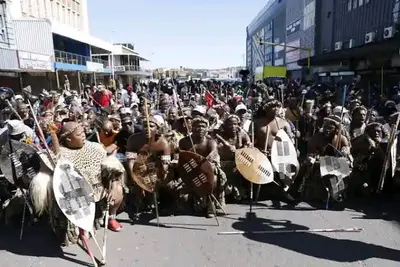
When the big day arrives and the families are ready to spot their sons among a group of boys, clad in blankets and carrying sticks, an elderly man, walking slowly and carrying a calabash, will throw it on the ground, in front of a family whose loved one lost his life, to announce the death. Screams of grief and agony will descend upon a ceremony that was meant to be celebratory.
This year, as we released the initiates back to their families' care, no calabash was broken. No family went home with tears except for joy. We enrolled 716 individuals and we released 716 initiates. This proves that a 100% success rate is not an impossibility but most importantly, initiation school is not a cemetery where people go to be buried.
This is against the backdrop of 61 deaths that occurred throughout South Africa in 2024. The subsequent year, a total of 48 deaths were announced by Cooperative Governance and Traditional Affairs Minister Velenkosi Hlabisa.
These are human beings and not mere numbers; thus, in Mpumalanga, our immediate response was to reverse the tragedies immediately. We employed intervention mechanisms to alleviate the shortfalls. Medical experts form a critical part of the initiation school to ensure the physiological well-being of our initiates. Without intruding in the sacred cultural customs, monitoring is implemented frequently. This demonstrates the significance of the intersection between modernity and cultures. The phenomena are not contradictory but rather complementary.
Some of the initiates are school-going children; they have missed critical classroom time. Cognisant of that, the provincial department of education created a curriculum catch-up programme specifically for this purpose. A clear indication that departments are not working in silos but rather in an intertwined manner that seeks to achieve common objectives.
Two months back, on these pages (Illegal initiation schools, be warned: we will hunt you and close you, with consequences to follow), I made an undertaking that the initiates who, in early May, undertook the pivotal journey would return to their families safely. This past weekend was marked by the 716 young and old men reunited with their loved ones. The journey of initiation, becoming a man, does not have to be deadly or be frowned upon, all due to rogue elements exploiting what should be a tradition and cultural pride display.
Like many provinces, Mpumalanga has had its fair share of challenges when it comes to initiation but that does not mean these have been addressed or are left hanging, while we put the lives of our children in danger. The lives, further, need to be considered and prioritised when it comes to the role the young men play in their communities. A role that should be defined on how best to fight scourges such as gender-based violence, crime and substance abuse, to mention a few.
A morning that started with gathered clouds, on a chilly Sunday morning, ended with ululating and reverberations of praise singing by men and women, as they looked forward to spending a night with their son, one that was not been missing for the past two months, but one who secured the family’s place in the community.
Speed Mashilo is Mpumalanga’s MEC for Human Settlements and Co-Operative Governance and Traditional Affairs





 English (US) ·