
 1 hour ago
3
1 hour ago
3
SEE YOUR AD HERE

ByTom Edgington and Harriet Agerholm
BBC Verify
There has been a large rise in the number of offenders being recalled to prisons in England and Wales having been released on licence, new government figures show.
There were 51,419 licence recalls in the year ending March 2026, up from 40,259 in the previous year - a 28% increase.
Although recalls in January to March were slightly lower than the previous three-month period, they remain well above historical levels.
The figures follow government schemes to release a number of offenders early in an effort to ease prison overcrowding.
The Ministry of Justice (MOJ) said offenders released on licence face strict conditions "and can be hauled back to prison if they break these rules".
Cassia Rowland, from the Institute for Government think tank, said most recalls are for breaches of licence conditions, such as missed appointments, rather than offenders committing further offences or posing a serious risk to the public.
"The probation service is overwhelmed, with high caseloads and lots of vacancies putting often inexperienced staff under huge pressure," she said.
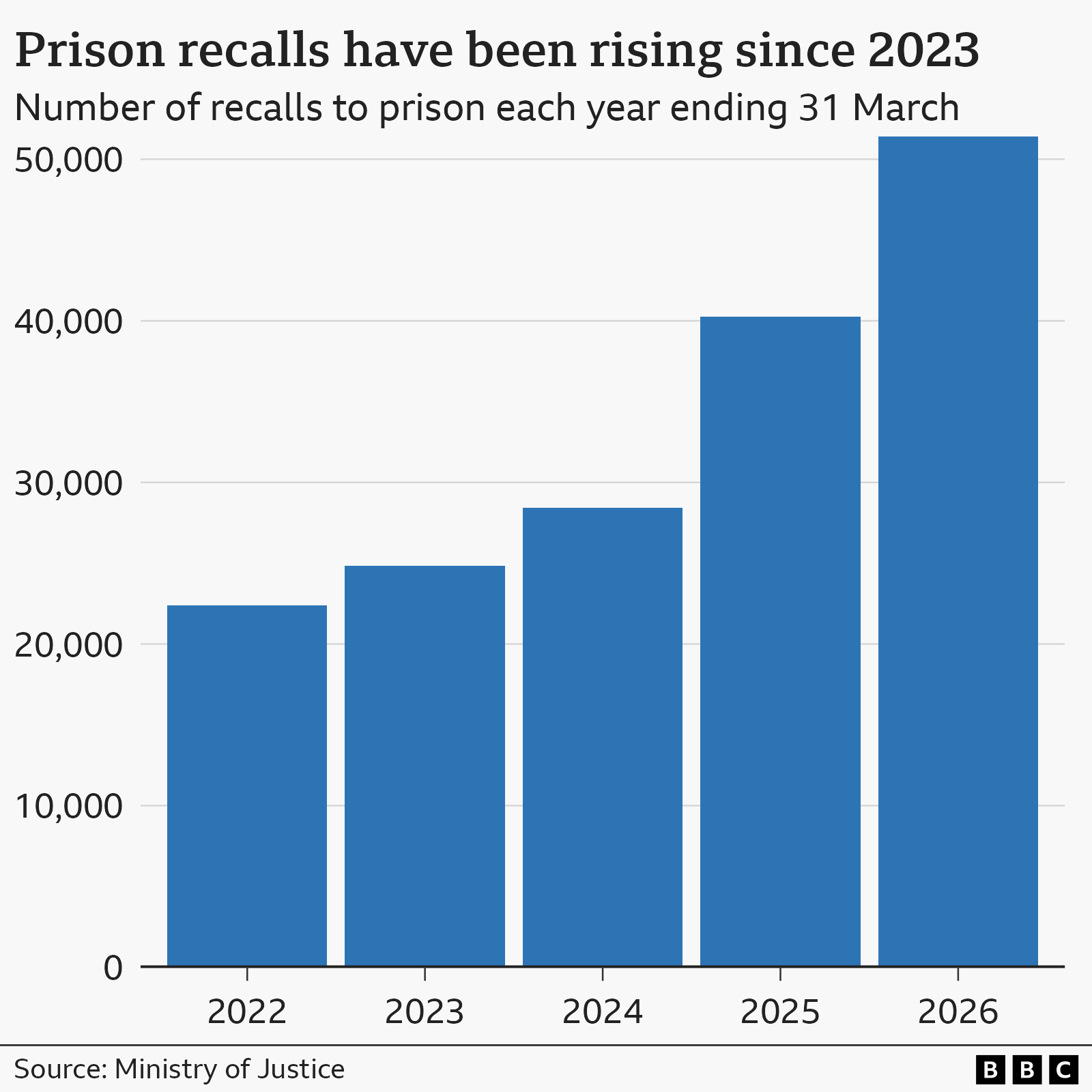
The most common reason provided for prison recalls between January and March was "non-compliance" (9,683), followed by "failed to keep in touch" (5,025).
There were 2,891 recalls because an offender faced further charges between January and March 2026, a 23% rise on the same period in 2025. More than one reason can be recorded against each recall.
Alex Hewson, from the Prison Reform Trust, said: "Many leave prison facing challenges such as addiction, poor mental health and unstable housing, making compliance with licence conditions difficult."
Responding to the figures, the MOJ said "public protection is our priority" and the statistics "show that we do not hesitate to recall offenders to prison when the risk escalates."
Sentencing Act release scheme paused
The increase in prisoner recall comes after the government introduced an early release scheme in England and Wales to help ease overcrowding pressure in September 2024.
The scheme meant eligible prisoners could be released after serving 40% of their sentence rather than half.
As of March 2026, 70,066 people had been released under the scheme, external.
Rowland says early release schemes have contributed to the increase in recalls.
"But these schemes have also made it harder for prisons and probation to prepare people for release effectively and give them support with basic things like finding accommodation, accessing job support and so on."
Despite the releases there were still 86,267 people in England and Wales' prisons, external as of 27 July, meaning the prison estate was 97% full.
In a further attempt to ease prison capacity pressure, Sir Keir Starmer's government had planned to release some offenders after serving just one-third of their custodial term.
The Sentencing Act release scheme was due to come into force from 2 September, but it has been paused by new Prime Minister Andy Burnham following criticism from survivors and victims' families.
The BBC understands around 700 prisoners would have been eligible for early release under the scheme's first phase.
Although the prison population has remained relatively stable since 2010, following rapid growth in the 1990s, government projections, external suggest it could rise to about 90,000 in 2028.
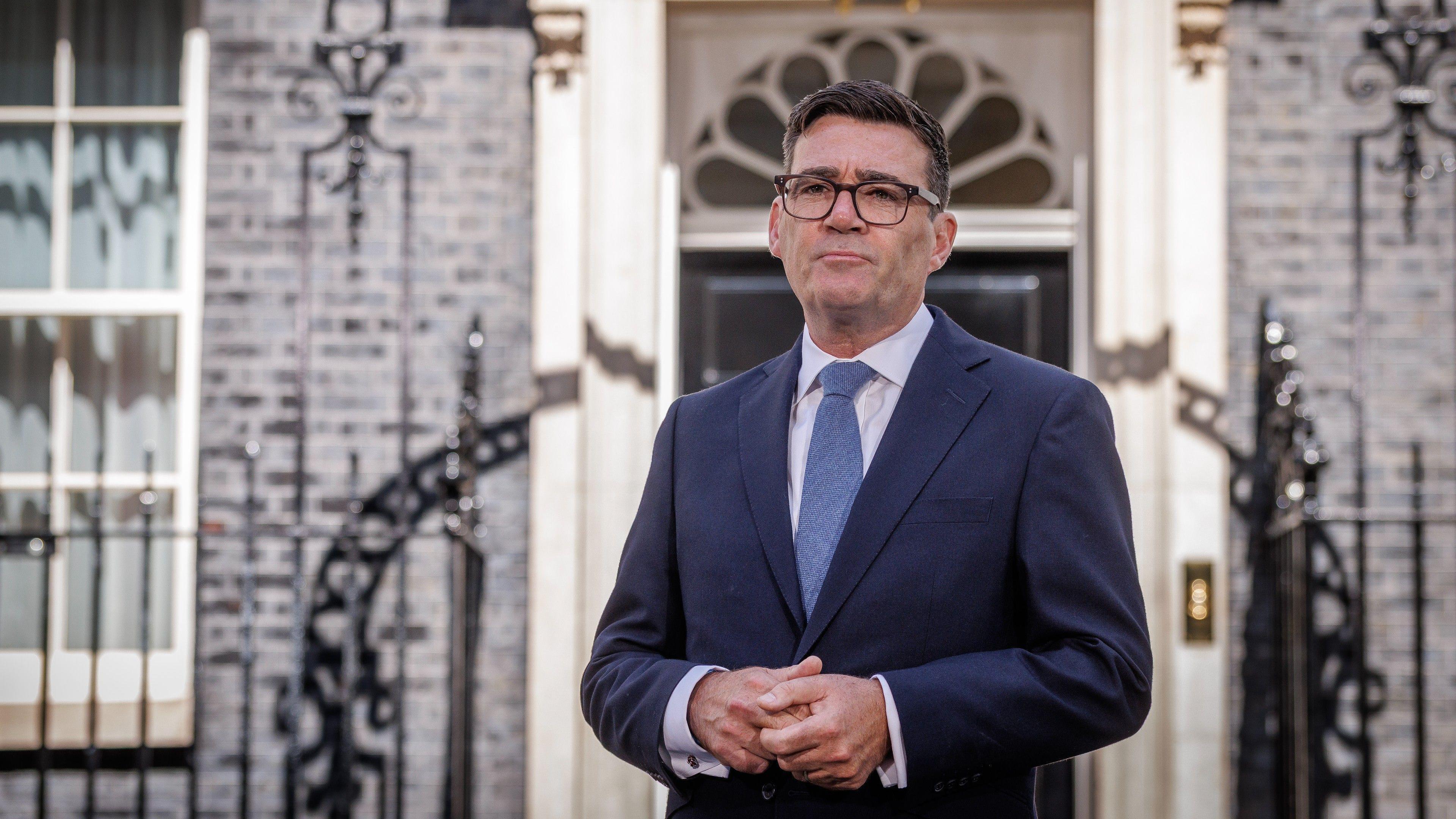 Image source, Getty Images
Andy Burnham has announced a pause to the Sentencing Act early release scheme
Using early release to manage prison overcrowding is not new.
Governments led by Labour and the Conservatives have each introduced emergency measures when the prison system has come under strain.
In October 2023, Rishi Sunak's Conservative government began releasing eligible offenders up to 18 days early. The scheme was eventually expanded to up to 70 days ahead of offenders' release date.
Nick Hardwick, the former chief inspector of prisons, argues early release alone will not solve the problem, arguing "it's just going to slow the rate of growth".
The Starmer government announced a plan to add 14,000 new prison places by 2031, external, including four new prisons. It said it would acquire land if necessary and would "make sure the supply always keeps up with demand".
The MOJ previously told BBC Verify the government had delivered about 3,200 prison places so far - 1,600 for each of their two years in office. However, this figure only covers new prison places and does not factor in those taken out of use.
Hardwick says expanding the number of prisons is only part of the answer because "the one thing you can't do quickly is produce experienced staff."
The prison building programme is already costing billions of pounds, he adds, leaving it up to ministers to decide how much they are prepared to spend to keep more people in prison for longer.
"There's no perfect solution... it's a question of what's the least bad option."
Additional reporting by Isobel Cottam







 English (US) ·