 2 days ago
1
2 days ago
1
SEE YOUR AD HERE
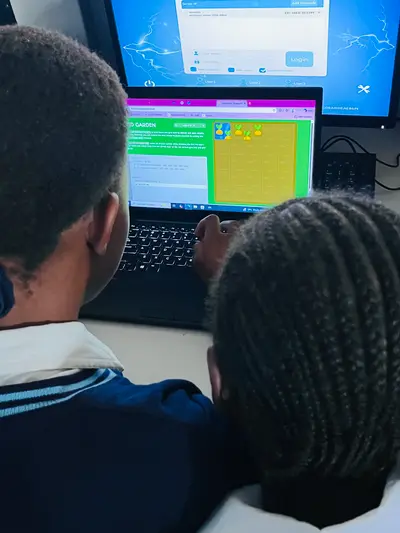
The inability of South Africa's education system to consistently equip graduates with skills that align with industry needs has long been cited as a major contributor to youth unemployment. As artificial intelligence (AI), automation and digital technologies continue to reshape economies across the globe, questions are increasingly being asked about whether the country's education system is preparing young people for the realities of a rapidly changing world.
These issues formed the basis of a recent Frank Dialogue held at the Maslow Hotel in Sandton under the theme "The Future of Education and Skills Development." The event brought together education policy experts, business leaders, academics, civil society organisations and government representatives to discuss practical solutions for improving education outcomes and preparing learners for the future world of work.
Minister of Basic Education Siviwe Gwarube attended the event as guest of honour and outlined her department's plans to strengthen and expand access to quality early childhood development. The dialogue was facilitated by its convenor, Professor Onkgopotse Tabane, alongside broadcaster Masa Kekana and Rivonia Circle director and author Tessa Dooms.
Among the participants were Professor Bonang Mohale, Chancellor of the University of the Free State; former Statistician-General Dr Pali Lehohla; technology and digital transformation expert Unathi Mtya; Professor Linda Meyer, Managing Director of Rosebank International and Visiting Professor at Nelson Mandela University; CHIETA Chief Executive Officer Yershen Pillay; and AfriForum Deputy Chief Executive Officer Werner Human.
While perspectives differed on some issues, there was broad consensus that South Africa's education system must evolve if it is to prepare young people for meaningful participation in an increasingly digital and technology-driven economy.
Bridging the Gap Between Education and Employment
A recurring theme throughout the discussion was the growing disconnect between what learners are taught and the skills required by employers.
Professor Bonang Mohale stressed the importance of creating stronger links between education, employment and entrepreneurship. He argued that South Africa needs to place greater emphasis on vocational and technical training, particularly through Technical and Vocational Education and Training (TVET) colleges.
Drawing on examples from countries such as Germany, Japan and China, Mohale noted that investment in technical skills development has played a significant role in supporting economic growth and industrial development.
He argued that vocational and artisanal careers should be viewed as equally valuable pathways to professional success.
"We need to bring back the glory of doing things with our hands," he said.
His comments reflected a broader concern that many young people continue to pursue qualifications that do not align with available opportunities in the labour market, while industries requiring technical and specialised skills struggle to find suitable talent.
Preparing Learners for a World of Constant Change
Technology and digital transformation expert Unathi Mtya challenged traditional assumptions about the purpose of education.
According to Mtya, education systems were historically designed for a world in which people could expect to enter a profession and remain in that field for most of their working lives. However, emerging technologies and AI have fundamentally altered that reality.
"The future of our education is no longer just about preparing our students for jobs, but it is about preparing them for perpetual adaptation," she said.
Mtya argued that future workers will need to continuously acquire new skills, adapt to changing industries and embrace lifelong learning. Rather than preparing learners for a single career path, education institutions should focus on developing critical thinking, creativity and problem-solving abilities.
Building a Curriculum for the Digital Economy
The impact of AI on education and employment featured prominently throughout the discussion.
Yershen Pillay, Chief Executive Officer of CHIETA, said South Africa urgently needs to move towards a skills-centred curriculum that reflects the realities of the modern economy.
"The AI revolution is happening now, not in the future," he said.
Pillay argued that learners need greater exposure to digital literacy, data analysis and AI-related competencies from an early age. However, he cautioned that technological advancement cannot be separated from broader questions of access and inclusion.
He highlighted the importance of investing in digital infrastructure, particularly in rural and underserved communities where access to technology remains limited.
According to Pillay, ensuring equitable access to digital tools and connectivity will be essential if South Africa hopes to avoid widening existing social and economic inequalities.
Decolonising Education and Strengthening Indigenous Knowledge Systems
Professor Linda Meyer argued that meaningful transformation requires more than symbolic change. She said South Africa must critically examine the knowledge systems that underpin its educational institutions and ensure that indigenous knowledge traditions receive the same recognition as Western perspectives.
Meyer questioned why African languages remain largely absent from higher education despite being the first language of millions of South Africans.
She argued that education should reflect the lived realities and cultural contexts of the communities it serves. For Meyer, genuine transformation requires creating space for multiple knowledge systems and ensuring that African languages and perspectives are integrated into teaching, research and academic discourse.
Strengthening Foundations for Future Success
The importance of foundational learning emerged as another key theme.
Werner Human emphasised the value of mother-tongue education, arguing that learners perform better when they are taught in languages they understand.
Teach South Africa founder Masemola raised concerns about the increasing number of learners choosing mathematics literacy over pure mathematics. While acknowledging the role mathematics literacy plays in supporting learner progression, he argued that the trend may limit access to science, technology, engineering and mathematics (STEM) careers.
Masemola called for greater investment in mathematics and science education, stronger support structures for learners and innovative approaches to improving teaching capacity in these subjects.
Early Childhood Development as a National Priority
Responding to many of the issues raised during the dialogue, Minister Gwarube argued that educational inequality begins long before learners enter high school.
"The injustice of our lifetime relating to our education system starts way before children even enter their classroom," she said.
She emphasised that interventions must begin during early childhood if South Africa is to improve long-term educational outcomes.
According to Gwarube, foundational literacy remains one of the country's most urgent challenges. Learners who struggle to read for meaning are unlikely to succeed in mathematics, science and other subjects later in their academic journey.
Her comments reinforced the view that meaningful education reform requires attention to the entire learning pipeline, from early childhood development through to tertiary education and skills training.
Looking Ahead
A clear message emerged from the Frank Dialogue: preparing young people for the future cannot be achieved through isolated interventions.
Participants agreed that government, education institutions, industry and civil society must work together to build a system that is responsive to economic realities and technological change. Whether through stronger TVET colleges, curriculum reform, digital skills development, mother-tongue education or early childhood interventions, the common objective remains the same: ensuring that young South Africans are equipped not only to find work, but also to create opportunities, adapt to change and contribute meaningfully to society.
As AI continues to transform economies around the world, the challenge facing South Africa is not whether change is coming, but whether its education system can evolve quickly enough to ensure that future generations are ready for it. The dialogue highlighted both the urgency of that task and the collective responsibility required to achieve it.






 English (US) ·