 2 weeks ago
7
2 weeks ago
7
SEE YOUR AD HERE
The NDR is not dead. But it is in danger. It is endangered by weak institutions, shallow leadership, corruption, social fragmentation, anti-African sentiment, policy drift, unemployment, collapsing public goods and the erosion of trust between government and citizen
14 JUL 2026, 14:28
13 min read
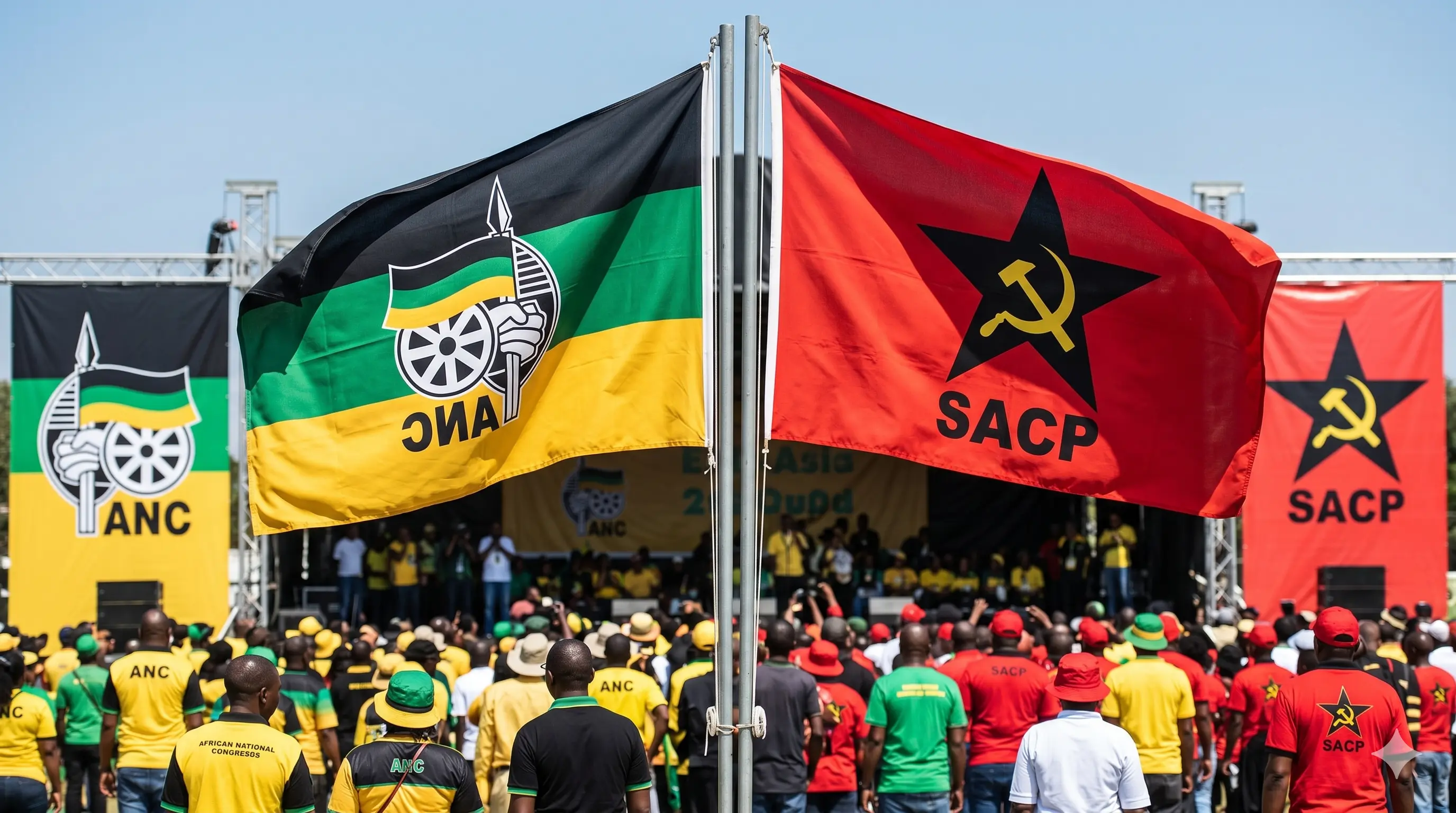
There are moments in the life of a nation when old concepts must either be renewed or allowed to die. South Africa is living through such a moment. Few concepts have carried as much historical weight in our democratic imagination as the National Democratic Revolution (NDR). Yet few have also suffered as much from repetition without explanation, invocation without implementation, and loyalty without serious reflection.
For some, the NDR has become a relic of liberation-era vocabulary, useful only to those who wish to sound ideologically rooted. For others, it remains a suspicious phrase, imagined as a hidden bridge to socialism or as proof that the democratic state has always carried a secret revolutionary agenda. But both readings miss the point. The NDR, properly understood, is neither a museum piece nor a conspiracy. It is the unfinished task of transforming a society built on settler-colonial conquest, racial domination, dispossession and structured inequality into one based on democracy, dignity, development and shared prosperity.
As President Thabo Mbeki reminded participants at the NDR Seminar hosted by the African Renaissance Podcast at the Houghton Hotel recently, the National Democratic Revolution is, at its core, about “two things”: national liberation and democratic change. The national dimension concerns the liberation of the oppressed from settler-colonial and apartheid domination. The democratic dimension concerns a system of governance in which the people themselves hold power. But Mbeki was equally clear that liberation cannot end with the vote. “It can’t end just with the vote,” he argued. “It must have economic consequences.”
That is the heart of the matter – bettering the lives of the people of South Africa in all dimensions of their being.
The crisis is not that the NDR no longer matters. The crisis is that too many who claim to speak in its name have stopped doing the hard work required to advance it.
The democratic breakthrough of 1994 was historic. It ended white minority rule, established constitutional democracy, expanded social rights and gave millions of black South Africans access to services previously denied to them. Water, electricity, housing, social grants, healthcare and education were expanded on a scale that cannot honestly be dismissed. The Constitution created a democratic framework in which the people, for the first time in South Africa’s history, could claim equal citizenship.
But political freedom was never meant to be the final destination. The vote ended apartheid rule, but it did not by itself undo apartheid’s uneven economy. It did not automatically transform ownership, spatial geography, land relations, patterns of investment, the structure of industry, or the daily humiliation of poverty. The deeper promise of liberation was always that political democracy would become the platform for economic and social emancipation.
That promise remains unfulfilled
We are still a society in which millions are unemployed, children go to bed hungry, public transport has collapsed in many communities, spatial apartheid planning continues to determine where people live and work and the poor experience the state as queues, broken clinics, unsafe streets, failing schools and distant courts. For the rich, state failure is inconvenient. For the poor, it is devastating. The rich can buy alternatives. The poor cannot. When policing fails, the poor suffer. When hospitals fail, the poor suffer. When trains collapse, the poor suffer. When municipalities decay, the poor suffer.
Zwelinzima Vavi captured this with brutal clarity when he warned that “the greatest betrayal of democratic South Africa has been the normalisation of mass unemployment”. Unemployment, in his framing, is not an unfortunate statistic. It is a social catastrophe. It means young people waking up every morning with nowhere to go. It means parents are unable to feed their children. It means workers accepting any wage because unemployment has become a weapon.
Vavi was equally sharp on hunger. “Hunger is not charity work,” he argued. “Hunger is a political question.” In a country capable of producing enough food to feed its people, hunger is not a natural disaster. It is the result of choices: choices about jobs, land, wages, transport, food systems, social grants and the failure to use the democratic state decisively to ensure that no child goes to bed hungry.
That is why the state matters. A weak state is not a neutral administrative problem. It is a class question. It punishes those who depend most on public goods.
This is perhaps the central lesson South Africa must recover: the National Democratic Revolution cannot be implemented by slogans. It requires institutions. It requires functioning public finance, accountable procurement, capable municipalities, reliable state-owned enterprises, working schools, safe communities, competent administration and leaders who understand that government is not theatre. Transformation is not a press statement. It is the disciplined use of state power to improve the material conditions of the people.
Trevor Manuel reminded the seminar that progressive politics must “seek truth from facts” rather than hide behind slogans. That is a valuable warning. The NDR cannot be defended by pretending that rhetoric is strategy. Nor can it be advanced by mistaking expenditure for development. Manuel’s central question was simple but profound: for the money the state spends, “what are you buying?” This is the question every department, municipality, state-owned enterprise and public representative should be forced to answer.
South Africa has not lacked policy documents, commissions, resolutions or strategic frameworks. The liberation movement has historically been one of the most analytical political traditions on the continent. It has diagnosed land, labour, capital, industrialisation, education, gender, race, Africa and the state with great sophistication. But analysis without implementation becomes ritual. Resolutions without accountability become decoration. Strategy without disciplined leadership becomes memory.
Saki Macozoma put this dilemma plainly. Sitting through the seminar, he said, confirmed his view that “the ANC and the liberation movement in general is a highly analytical organisation.” But the real question, he insisted, is different: “Why is it that we know something? Why is it that we could not stop some things from happening when we had all the analytical tools over the years?”
That question should haunt every serious cadre of the democratic movement.
Macozoma’s intervention exposed one of the great weaknesses of the post-apartheid period: the gap between knowing and doing. The movement has often known what the problem is. It has known what its documents say. It has known what the Freedom Charter demands, what Strategy and Tactics requires, what conference resolutions instruct and what communities experience. Yet too often there has been no disciplined machinery to translate that knowledge into action.
This is not merely an administrative failure. It is an organisational and ethical failure.
The painful question, therefore, is not only whether the NDR remains relevant. It is whether the organisations that claim to lead it still possess the character, discipline and capacity to implement it.
Economic transformation illustrates the point. It was never enough simply to replace white faces with black faces in existing structures of wealth. The de-racialisation of ownership was necessary but it was never sufficient. The deeper task was to build productive capacity, industrialise, beneficiate resources, expand manufacturing, mobilise capital, create skills, support innovation and ensure that black participation in the economy served a broader national purpose.
Black business, where it has emerged as a beneficiary of democratic transformation, must therefore ask itself a difficult question: has it merely entered the economy on terms set by existing capital or has it helped transform the economy itself? A patriotic business class cannot measure its success only by accumulation. It must invest in nation-building, education, productive enterprise, savings, innovation and future industries. It must help build, not merely consume, the democratic order that made its rise possible.
At the same time, the state must think seriously about capital. There is no developmental project without resources. The state cannot transform society if it cannot mobilise the capital required for infrastructure, industry, technology and employment. Treating all private capital as the enemy of the NDR is not strategy; it is a slogan. Equally, surrendering the developmental role of the state to private capital is not modernisation; it is defeat.
President Mbeki warned against precisely this danger. “Let’s run away from slogans,” he urged. A democratic state must understand its relationship with capital scientifically, strategically and practically. It must be capable of mobilising capital for development without surrendering public purpose to private accumulation. The task is not to worship private capital, nor to shout at it from a distance. The task is to discipline, direct, partner and regulate it in the national interest.
This is why the collapse of state capacity is so dangerous. Eskom, Transnet, SAA, SARS, municipalities and other public institutions are not merely bureaucratic entities. They are instruments through which the democratic state either advances or abandons transformation. When they are destroyed, the NDR is weakened. When revenue collection is undermined, schools, clinics and infrastructure suffer. When electricity collapses, industrialisation suffers. When rail collapses, workers suffer. When public institutions fail, private alternatives grow — and inequality deepens.
Mbeki expressed this danger starkly: “You remove the state, you weaken the state, you guarantee the perpetuation of the legacy.” He was not defending a bloated, corrupt or inefficient state. He was defending the necessity of a capable developmental state. “A strong, capable, ethical state,” he argued, is critical to the achievement of the objectives of the NDR.
A society that allows the state to wither should not pretend that transformation can continue unaffected. The weakening of the state means the strengthening of those who can afford to live outside it.
The NDR also cannot survive without Pan-Africanism. South Africa’s liberation was never a purely South African achievement. It was carried by African solidarity, supported by neighbouring states, defended by international allies and located within the broader struggle for African dignity. To now turn African migrants into scapegoats for unemployment, crime and service delivery failures is not only morally bankrupt; it is politically dangerous.
Dr Nkosazana Dlamini-Zuma challenged this scapegoating directly. “Even if all Africans were to leave,” she asked, would South Africa’s unemployment disappear? “Certainly not.” The real causes of unemployment lie elsewhere: in the structure of the economy, weak industrialisation, poor skills development, inequality, landlessness and the failure to build productive capacity.
She also reminded the seminar that our education system “must not train people only as job seekers”; young people must also become “job creators.” That is the revolutionary content of skills development. It is not simply about certificates. It is about equipping young people to repair, build, install, innovate, cultivate, manufacture and create.
Anti-African sentiment is therefore a distraction from structural failure. Worse, it risks isolating South Africa from the continent on which its future depends. The answer to unemployment is not xenophobia. It is industrialisation, skills, investment, land reform, regional integration and a developmental state capable of putting people to work.
The labour question is equally central. The working class was one of the great motive forces of the liberation struggle. But today it is fragmented across permanent work, casual work, informal work, domestic work, farm work, community work, platform work and unemployment. Trade unions are weaker, factories have closed, and many young workers have no memory of organised workplace power. Yet without working-class organisation, the NDR loses its social engine.
The task is not to romanticise the labour movement of the past. It is to organise the working class of the present. That means organising precarious workers, unemployed youth, township communities, platform workers and those trapped in informal survivalism. It means rebuilding class consciousness in a society where desperation too easily becomes anger at other poor people.
The most difficult argument, however, concerns counter-revolution. South Africa must be careful here. The term should not become a lazy insult for anyone who disagrees with the ANC. But neither should we pretend that democratic transformation has no enemies. Every revolution produces forces that seek to reverse, dilute or destroy it. The real question is whether we have the courage and intellectual honesty to identify these forces properly.
Some threats are external. Some are internal. Some are organised. Some emerge through corruption, greed and decay within the movement itself. A corrupt cadre who destroys a public institution may serve the counter-revolution more effectively than an open ideological opponent. A leader who weakens SARS, collapses a municipality, steals from a state-owned enterprise or turns public office into private accumulation does not merely commit maladministration. They weaken the very instruments required to transform society.
This is why organisational renewal cannot be reduced to conference slogans. Renewal means rebuilding ethical leadership, political education, internal democracy, accountability and competence. It means choosing leaders for character and capacity, not factional loyalty. It means telling the truth about failure without surrendering the truth about achievement. It means refusing both nostalgia and cynicism.
The ANC, if it is to remain the leader of the NDR, must recover the courage to lead society intellectually and morally. It must explain what was achieved after 1994, acknowledge what was lost, confront what was destroyed, and admit where it failed. It must stop outsourcing its historical memory to opponents and stop hiding behind language that no longer convinces the people.
Above all, it must do what President Mbeki demanded: “empower ourselves with the truth.” That may be the most important injunction to emerge from the seminar. Truth is not comfortable. It forces the movement to confront counter-revolution, but also corruption. It forces it to confront hostile forces, but also internal decay. It forces it to defend the democratic state, but also to admit where that state has failed the people.
The NDR is not dead. But it is in danger. It is endangered by weak institutions, shallow leadership, corruption, social fragmentation, anti-African sentiment, policy drift, unemployment, collapsing public goods and the erosion of trust between government and citizens.
To rescue it, South Africa must return to first principles. National liberation must mean more than the vote. Democracy must mean more than elections. Transformation must mean more than representation. Economic freedom must mean more than individual accumulation. Pan-Africanism must mean more than speeches. State power must mean more than office.
The unfinished work of liberation now demands a new seriousness. It demands a capable state, organised people, patriotic economic actors, honest leadership and a movement willing to empower itself with truth.
The NDR will not be completed by those who merely chant it. It will be completed by those with the discipline, courage and integrity to make it real in the lives of the people.
Kefentse Mkhari is socioeconomic justice activist, broadcaster and communications strategist advancing democratic participation, youth leadership and the African Renaissance through research, dialogue and public engagement.


 English (US) ·