 1 hour ago
1
1 hour ago
1
SEE YOUR AD HERE
Less than two years after returning the Labour Party to power in the United Kingdom in a landslide election victory, Keir Starmer has announced he will step down as Britain’s prime minister. Analysts say his resignation is likely to propel Greater Manchester Mayor Andy Burnham into Downing Street.
Starmer’s decision follows months of pressure to step aside from Labour MPs and cabinet ministers, many of whom have grown increasingly concerned about the party’s electoral prospects amid the rapid rise of the far-right Reform UK and resoundingly dismal council election results in May.
Recommended Stories
list of 4 items- list 1 of 4How Canada’s Muslims face ‘perfect storm’ amid rising xenophobia
- list 2 of 4Gaza’s surfers seek solace from war in the Mediterranean Sea
- list 3 of 4US strike on an alleged drug boat in eastern Pacific kills two
- list 4 of 4JD Vance touts progress on key issues in US-Iran negotiations
“The question my party is asking now is whether I am best placed to lead us into the next general election. I have heard the answer of my parliamentary party to that question, and I accept that answer with good grace,” Starmer told the media outside 10 Downing Street on Monday.
His decision will trigger a leadership contest that will produce the UK’s seventh prime minister in a decade. Here’s how it’s all likely to unfold in the coming weeks.
Why has Keir Starmer resigned as prime minister?
Despite Labour’s emphatic victory in the 2024 general election, the party’s popularity has slumped while support for the anti-immigration, far-right Reform UK party, which is led by Nigel Farage, has surged.
In local elections last month, Labour suffered heavy losses while Reform made major gains. Labour lost 1,496 council seats, while Reform secured 1,453 councillor positions – mostly from Labour – and took control of 14 councils. The elections were widely seen as a referendum on Starmer himself.
Labour has also lost support on both sides of the political spectrum. Starmer’s efforts to adopt tougher rhetoric on immigration have failed to halt Reform’s rise among former Conservative voters as well as among sections of Labour’s traditional working-class base, particularly in northern England.
Meanwhile, some critics within Labour have linked declining support among parts of the party’s progressive base to Starmer’s positions on Israel and welfare cuts.
The mounting electoral pressure has fuelled concerns among Labour MPs about the party’s prospects at the next general election, which must be held by July 2029.
 British Prime Minister Keir Starmer embraces his wife, Victoria Starmer, after announcing the timeline for his resignation outside 10 Downing Street, in London, the United Kingdom, on June 22, 2026 [Jack Taylor /Reuters]
What happens now?
Standing outside Downing Street on Monday, Starmer confirmed he would step aside after losing the confidence of much of his parliamentary party.
“I have spoken to his majesty the king this morning to inform him of my decision,” he said.
“I will ask the National Executive Committee of the Labour Party to set out a timetable with nominations opening on July 9 and completed by the summer recess [July 16]. In the case of a contest, this will ensure a new leader is in place before Parliament returns in September,” he said.
“I will remain in post as prime minister until the contest is complete. And I will do everything I can to ensure an orderly handover of power.”
Starmer’s announcement formally triggers the leadership contest.
Under Labour Party rules, candidates must secure nominations from 20 percent of Labour MPs to enter the contest. With Labour holding 403 seats in the UK Parliament, that means any candidate would require the backing of at least 81 MPs.
It remains to be seen how many candidates there may be.
Burnham, who rejoined Parliament by winning a by-election in northern England’s Makerfield last week, is understood to have secured enough support to cross this threshold.
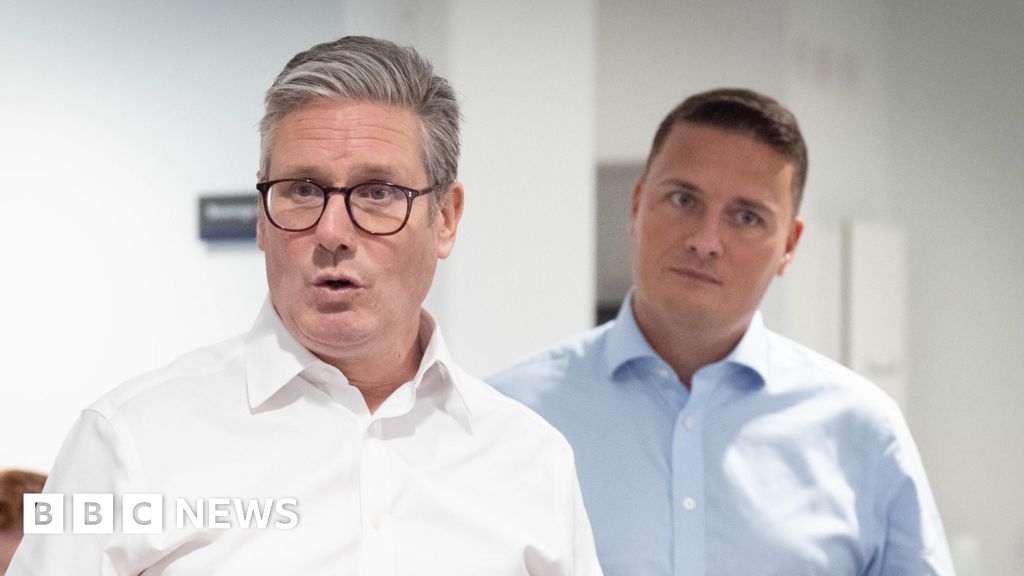
Wes Streeting, who recently resigned as health secretary in protest over the council election results, was also understood to have enough support. However, he has stated that he will stand aside to allow Burnham to secure the leadership.
How does the leadership contest work?
Christopher Featherstone, an associate lecturer in politics at the University of York, said Starmer will remain as prime minister until a new leader is declared.
If only Burnham stands – or if he is the only one to gain enough support to do so – then that is the end of the contest. He will win the leadership.
If other contenders emerge, an election will take place via a preferential ballot. Any person who has been a member of the Labour Party for at least six months before an election is scheduled can vote.
If no candidate wins more than 50 percent of first-preference votes, lower-ranked candidates are eliminated and their votes redistributed until a winner emerges.
In the meantime, Featherstone said: “If one frontrunner receives overwhelming support, the other candidates may resign to avoid the contest altogether … However, it’s also possible that Labour may want to hold an election so that the new leader has greater legitimacy when taking the leadership.”
In other words, if the contest proceeds as planned, Labour expects a new leader to be in place before Parliament returns in September. If a single candidate secures overwhelming support, the process could conclude more quickly.
Once a successor is selected, Starmer will formally resign as prime minister to King Charles, who will then invite the new Labour leader to form a government.
The constitutional principle is that the British monarch appoints the person who can command the confidence of the House of Commons.
Why is Andy Burnham the frontrunner?
Burnham, who is due to be sworn in as Makerfield’s new MP on Monday, is widely regarded as the leading candidate to replace Starmer.
“I will put myself forward as part of this process,” he told Sky News.
His victory in last week’s Makerfield by-election has further strengthened his position. Burnham won 55 percent of the vote, finishing more than 9,200 votes ahead of Reform UK’s Robert Kenyon. The result had been expected to be closer than this.
As mayor of Greater Manchester, Burnham has cultivated a reputation as one of Labour’s most recognisable and popular politicians. He has said that Westminster could learn from what he calls “Manchesterism” – a model he has worked with that combines pro-business policies with greater public control over essential services.
Burnham’s appeal among Labour’s traditional working-class voters has led many within the party to view him as one of Labour’s strongest options for winning back the so-called “red wall” constituencies that have increasingly shifted towards Reform UK.
His rise comes after Reform’s strong performance in local elections, fuelling concerns among Labour MPs that the party needs a leader capable of reconnecting with voters who have drifted away in recent years.
Featherstone said Burnham’s momentum could deter rivals from entering the race. “The most obvious candidate will be the newly elected Andy Burnham, who is riding high after convincingly winning the Makerfield by-election,” he said.
“Burnham entered Parliament with the explicit intention of challenging Starmer, meaning that he cannot avoid standing for the leadership. Burnham’s momentum from his election victory could also put off other potential candidates from standing.”
 Newly elected Makerfield MP and former Greater Manchester Mayor Andy Burnham at Manchester Piccadilly Station as he leaves for London, in Manchester, UK, on Monday, June 22, 2026 [Temilade Adelaja/Reuters]
What about other candidates?
Former Health Secretary Wes Streeting had long been viewed as Burnham’s most likely rival and had previously indicated he would run in a leadership contest.
However, on Monday, he endorsed Burnham instead. “Having spoken at length to Andy in recent days, I’m convinced that there is a place for those ideas under his leadership; that he is committed to building an inclusive party that draws on the best of our political traditions; and that he can win the fight of our lives against the forces of nationalism,” Streeting said.
“We could spend the summer exaggerating small differences, or we can roll up our sleeves and help him to deliver the change our party and our country needs. That is the choice that I am making, and I hope that everyone else will back Andy, too.”
Another possible contender was Angela Rayner, Labour’s former deputy prime minister, among the figures most frequently mentioned as a potential challenger. However, she has also indicated that she will support Burnham.
Rayner “is popular in the Labour Party, and with some MPs, and she played a key role in the 2024 general election campaign”, Featherstone said.
He also identified former Defence Minister Al Carns as a possible future contender, saying that the MP “would likely need a greater national profile before he stands” and that he “may hold back, potentially challenging for the leader in the future”.
“Burnham has the greatest momentum coming into the contest, and he has essentially forced Starmer’s hand,” Featherstone said. “He is widely considered the frontrunner, with many considering the contest to be his to lose.”

 English (US) ·