
 6 hours ago
3
SEE YOUR AD HERE
Pillay also called for Israeli President Isaac Herzog and former defence minister Yoav Gallant to be investigated and brought before a court over genocide allegations
20 OCT 2026, 16:03
6 min read
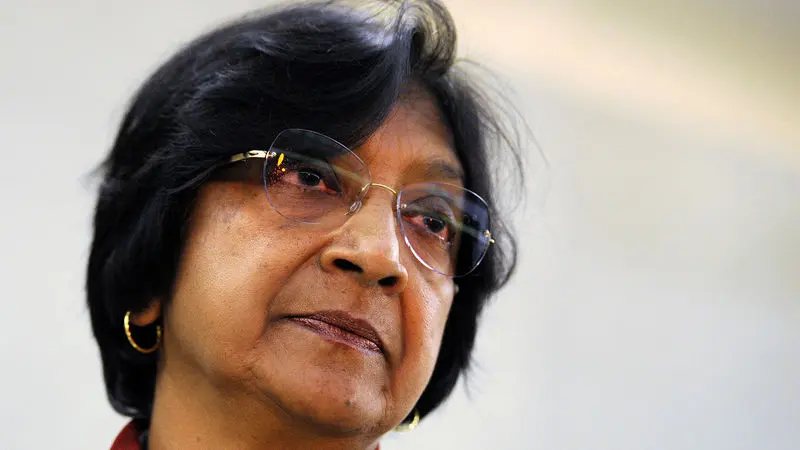
Nobel Peace Prize laureate Navi Pillay has called for Israeli Prime Minister Benjamin Netanyahu to stand trial for genocide in Gaza.
In an interview published by Spanish newspaper El País on Tuesday, Pillay also called for Israeli President Isaac Herzog and former defence minister Yoav Gallant to be investigated and brought before a court over genocide allegations.
Her demand comes amid widespread international and South African recognition of her Nobel Peace Prize, attacks on her credibility by Israel and growing pressure on the International Criminal Court (ICC).
Pillay defended the findings of the United Nations commission she chaired, which concluded in September 2025 that Israel had committed genocide against Palestinians in Gaza.
The commission found that Israel had committed four of the five genocidal acts identified under the Genocide Convention. It also found evidence of genocidal intent, drawing on statements by senior Israeli officials and the conduct of Israeli forces, including widespread destruction, forced displacement and restrictions on humanitarian assistance.
Pillay rejected accusations that the commission's conclusions were politically motivated, saying investigators had independently verified the evidence on which their findings were based.
“We have not included a single piece of evidence that was not personally verified,” she told El País, according to a translation of the Spanish-language interview.
Israel has rejected the commission's findings, accusing investigators of bias and maintaining that its military campaign was directed against Hamas after the attacks of 7 October 2023.
Pillay's demand goes beyond the ICC arrest warrants against Netanyahu and Gallant, issued in November 2024 over alleged war crimes and crimes against humanity. Those warrants do not include genocide charges.
The International Court of Justice (ICJ) is separately considering South Africa's case against Israel under the Genocide Convention. Although it has ordered provisional measures, it has not delivered a final judgment on whether Israel has committed genocide.
Pillay's Nobel Peace Prize, announced on 9 October, has drawn congratulations from international leaders, human rights organisations and institutions across South Africa.
UN secretary-general António Guterres described her as a champion of international law and human rights, saying she had demonstrated that the force of law must prevail over the law of force.
African Union Commission chairperson Mahmoud Ali Youssouf also welcomed the award, recognising her contribution to international justice and human dignity.
In South Africa, President Cyril Ramaphosa, parliament, the department of international relations and cooperation (Dirco), Justice Minister Mmamoloko Kubayi and the South African Human Rights Commission congratulated Pillay.
Dirco praised her independence, courage and lifelong commitment to accountability, highlighting her work against apartheid, her contribution to the prosecution of genocide in Rwanda and her leadership of the UN commission investigating violations in Gaza.
The department described her work as an important contribution to international law at a time when the institutions responsible for upholding it were under increasing attack.
Human Rights Watch also welcomed the award, with executive director Philippe Bolopion praising Pillay's contribution to human rights and international justice in South Africa, Rwanda and the occupied Palestinian territory.
ICC president Tomoko Akane congratulated Pillay, describing the award as recognition of the importance of international justice to lasting peace.
The international recognition has nevertheless been accompanied by fierce criticism from Israel.
Following the Nobel announcement, Israel's foreign ministry accused Pillay of promoting anti-Israel prejudice and rejected the findings of the commission she chaired.
Pillay has dismissed the personal attacks, maintaining that critics should address the evidence rather than attempt to discredit those responsible for investigating alleged international crimes.
Democratic Alliance (DA) leader Geordin Hill-Lewis has described aspects of Pillay's recent work as divisive, saying he would await a final ruling by the ICJ before accepting that Israel had committed genocide in Gaza.
In an interview with Voice of the Cape on 13 October, Hill-Lewis was questioned about the DA's position on Palestine and the absence of a public congratulatory message from the party after Pillay's Nobel Peace Prize.
The interviewer also raised concerns about the DA's electoral support in predominantly Muslim areas of Cape Town and whether its position on Palestine was affecting its standing among voters.
Hill-Lewis defended the DA's support for a two-state solution and condemned Israeli settlement expansion as incompatible with lasting peace.
But when asked whether the DA accepted that Israel had committed genocide in Gaza, he said the determination should be left to the ICJ. “That is a legal term. It is not a political term. It is not a term of debate or opinion,” he said.
He said he would abide by the court's final determination rather than pre-empt its decision.
Asked why the DA had not publicly congratulated Pillay, Hill-Lewis acknowledged the significance of the award and offered his personal congratulations.
“It is a remarkable achievement for the judge and I have no doubt that it's a very special thing for her and indeed for our country. And, of course, I do congratulate her,” he said.
But he added: “Obviously some of the things that some of her more recent work is much more divisive and causes a great deal of debate, and I just don't think that it's our place to get into that debate.”
Hill-Lewis said the DA was focused on uniting South Africans rather than becoming involved in debates that could deepen divisions. “There's more than enough people dividing our country. Our job is to unite.”
Pillay’s recognition follows decades of work in human rights and international justice, beginning with her opposition to apartheid and extending to some of the world's most significant international criminal proceedings.
She served as president of the International Criminal Tribunal for Rwanda and participated in the landmark Akayesu judgment, which established that rape and sexual violence could constitute acts of genocide.
She later served as a judge at the ICC and as UN High Commissioner for Human Rights.
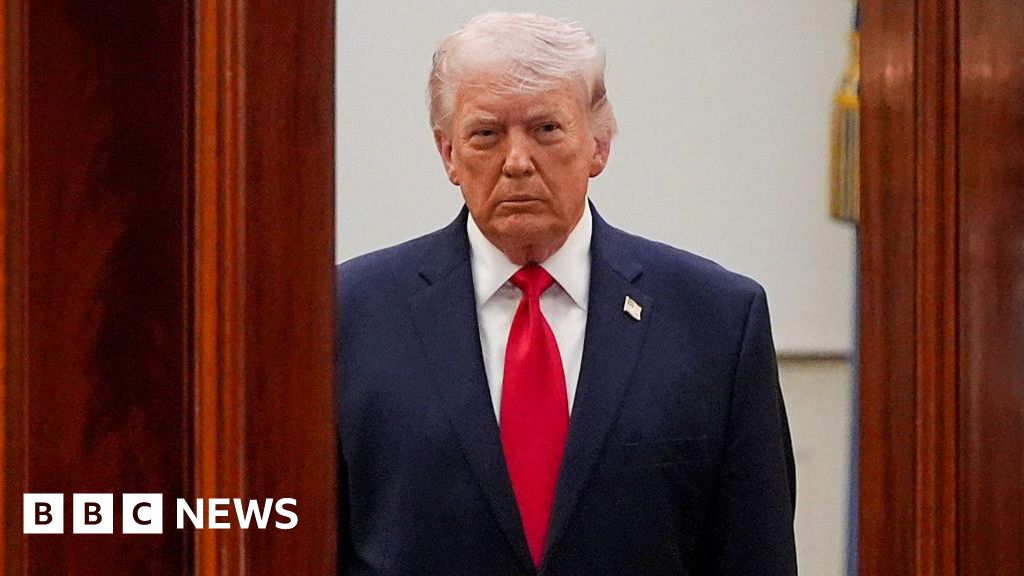
Her latest demand for accountability comes as the ICC faces sweeping sanctions imposed by the administration of US President Donald Trump.
On 9 October, Washington imposed sanctions directly on the court as an institution, following earlier measures targeting individual judges and prosecutors. The ICC rejected the sanctions as an attempt to undermine its independence and obstruct its work.
Pillay criticised the sanctions in an interview with Reuters on 13 October and called on the United States to return to its traditional role as a defender of human rights.
She also visited the ICC in The Hague to express solidarity with its staff, praising their commitment to international justice despite growing political pressure.
European governments are considering measures to protect the court and companies providing it with essential services, although no new protective mechanism has been activated.
The ICC's existing warrants against Netanyahu and Gallant remain in force, while South Africa's genocide case continues before the ICJ.
 English (US) ·