
 1 hour ago
1
1 hour ago
1
SEE YOUR AD HERE
In a country cut by race, class and inequality, illegal immigration makes the wound deeper because it exposes who benefits, who pays and who pretends not to see
31 JUL 2026, 00:00
9 min read
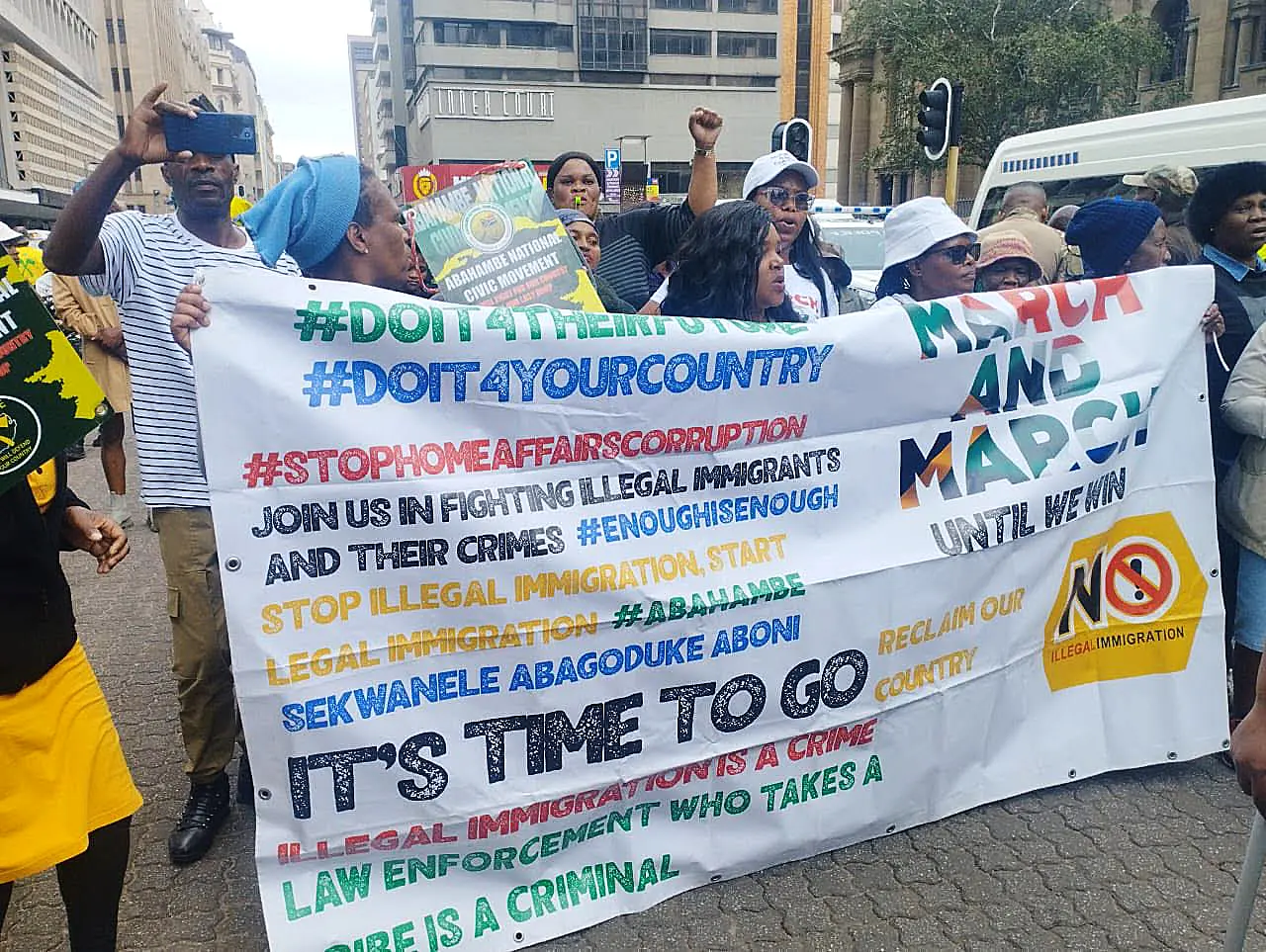
We need a new language to put words to something many South Africans have seen but could not name.
The privileged — both black and white — have said their “prayers”, raising their hands and voices to the heavens to save undocumented immigrants. Undocumented migrants have fled the communities they lived in for years only to be trapped in deportation stations. They were “going home”.
The responses from the anti-illegal immigrants movements were immediate: How is it normal for an undocumented person to live and work in the country for years and remain poor?
That question is not about one family, factory or farm. It is about a pattern. It is about the callousness of African states. A two-faced attitude driven by greed and convenience that cuts across race, class and sector.
When we do not name it, it hardens into what people are calling “volunteer slavery of the undocumented” — work without progress, without dignity and without legal protection.
In a country cut by race, class and inequality, illegal immigration makes the wound deeper because it exposes who benefits, who pays and who pretends not to see.
There are things that makes the plight of undocumented immigrants arouse impatience and anger.
Nothing to show for years of labour
If a person — illegal immigrant or undocumented foreigner — works full-time for years and lives in a shack, wears the same clothes and has nothing saved, then that was not a wage. It was a survival allowance. Wages are supposed to move a life forward. These did not.
Some of us are products of the poor working class. We know suffering and misery. We see spotless bakkies. Leather couches. Stanley cups. Woolworths bags. Next to workers living in poverty. The business grows. The workers do not. The picture breaks something in people because it tells the truth without words.
The phrase, “my favourite workers”, reveals the trick. A personal relationship was used to keep them loyal. But no legal relationship was used to protect them. No contract. No UIF. No raise. Just the word “favourite”.
This not only affects farmworkers. We see it among domestic workers in Sandton, builders on estates in Midrand, waiters in Cape Town restaurants, cleaners in Durban malls, packing staff in retail chains and nurses in private clinics who are paid cash. The formula is the same: keep African labour cheap, keep it quiet and call it “helping”.
The hypocritical attitude
In private, the law is ignored for convenience. Hire people without permits because they are vulnerable. Vulnerable workers do not go to the Commission for Conciliation, Mediation and Arbitration.
They do not ask for contracts. They do not report R800 for a 60-hour week. They are grateful for “a job”. The employer tells themselves: “At least they have a job.”
That is not charity. This is a business model built on legal vulnerability. It is slavery. When your business makes millions and the person making it possible cannot afford rent, you are not employing them; you are extracting. This is abusive enslavement. You are using their fear of deportation as leverage to pay less.
In public, when the law is enforced, it becomes a “humanitarian crisis”.
The same people or their peers, post prayers and phone radio talk shows. They unleash human rights campaigns. They cry about children in the rain. They call March and March “xenophobic”. They point at the shacks and say: “Look how cruel this is.”
But they never ask: Who created the conditions for that shack? Who benefits from slavery wages? Who paid wages that could never buy a brick? Who kept someone for five to 10 years and never moved them a step forward? Or advised them to get proper papers?
That is selfishness. Use the person when the law is loose. Mourn the person when the law is applied.
It is goody-goody in public. Greedy in private.
Slavery was forced labour; no pay, no choice. “Volunteer slavery” is different but it rhymes. No legal status equals no bargaining power.
The worker “volunteers” to accept abuse because the alternative is deportation or going home with nothing. Consent under threat is not consent.
No upward mobility after five to
10 years. No UIF. No skills training. No housing improvement. No savings. The job is a treadmill. You run. You stay in the same place. All the while, the family you work for is warm, the factory makes money, the farm grows…
Moral cover
“They are like family.” “Siyafana Sonke. We are all Africans.” “At least they have shelter and food.”
The language hides an economic relationship. It turns an employer into a saviour and the worker into a charity case.
This is what the anti-illegal immigrants marches are really saying: if your business is better, the people who built it must, first, be legally in the country. High-end clinic nurses must live in better homes. Supermarket packers must afford better houses. Farmworkers must not live in shacks next to a farmhouse with a pool and a jacuzzi.
If your profit depends on their labour, their lives should improve with yours. That is not radical. That is basic decency.
It is white people who largely own the mines, farms, factories and beautiful homes. But this neither singles out “white people” nor plays the race card. And yes, there are many white employers who have done this.
But there are also black business owners who underpay Zimbabweans in construction. Indian restaurant owners who pay cash. Coloured contractors who keep Mozambicans off the books.
To make this only about race lets the real problem off the hook: greed.
Xenophobia is real and must be condemned. People have been attacked, killed and scapegoated. That is a crime.
But class exploitation is also real. When we reduce everything to “white versus black” or black versus black, we miss the engine: the employer-employee power imbalance and the struggle for law enforcement.
Race and class are often the language we use to describe it. Greed is the fuel that keeps it running.
Illegal immigration makes this worse because it adds another layer — it cuts into South Africa’s racial divisions. It becomes: “foreigners are taking jobs” versus “you are exploiting foreigners”. Both can be true at the same time. And the privileged few who run capitalist-sponsored NGOs benefit from both arguments staying loud.
Let’s name them. The farmer who pays R800 and sells produce at exorbitant prices. The restaurant owner who saves R50 000 a month by not registering their staff. The estate developer who finishes six months early because undocumented labour works 12-hour days.
The domestic worker’s employer who says “she’s part of the family” but pays her less than the gardener.
They benefit directly. Then they go on radio or Facebook and speak about “human rights” and “dignity”. Siyafana Sonke released media statements all over radio and TV.
That is the two-faced attitude: private extraction; public compassion.
It is the same as companies that post billion-rand profits and then ask the government for tax breaks “to create jobs”. The jobs are created. The people stay poor.
The anger at what also happens to undocumented immigrants is justified. Years of working for peanuts is not “a little help”; it is a life of sacrifice.
Enforce the law on employers first
If we are serious, here is what justice looks like: No pity, only law.
Raids cannot target only workers. March and March must not take the law into its own hands. It must do joint audits or be an observer to what Home Affairs, the Department of Labour and the South African Police Service do:
• Fine businesses that employ undocumented immigrants.
• Publish the names of repeat offenders.
• Create a backpay fund. If someone worked five to 10 years without a contract, calculate what was lost and process a claim. When it costs more to break the law than to follow it, behaviour changes.
• Regularise status so exploitation stops. People cannot demand rights if they fear arrest.
• Tie profit to living standards. Why can the family home or farmhouse be renovated and the worker’s room remain a stinky shack?
We can do two things at once: Enforce immigration law and treat people with dignity. That means no children in the rain during raids. It means social workers are present. It means shelters, not cages.
But it also means we stop calling five to 10 years in a shack “kindness”. It wasn’t. It was cheap labour.
This is why March and March resonated. It is not only about undocumented and “illegal immigrants”. It is about a state and an economy that allowed this to become normal. It is about communities watching public services collapse while employers get rich off unprotected labour.
It is about South Africans and documented migrants competing for R80 a day. It is about the feeling that the law applies to only the poor.
When the government does not enforce the law, people express their frustration. Sometimes in marches. Sometimes in violence.
Both are symptoms of the same failure: the state outsourced its responsibility to employers and employers outsourced their conscience to Facebook prayers and the Human Rights Commission.
Cries for human rights and prayers do not pay rent. They do not buy school shoes. They do not build a house. Justice looks like this:
• Back pay calculated and paid. If you benefited for five to 10 years, then you owe your employee five to 10 years back pay.
• Employers who broke labour law, regardless of race, prosecuted.
• Workers are given a path to get either legal status with rights
or with assisted voluntary return with dignity.
• A new standard: if you profit from someone’s labour, their life must get better while they are with you. We cannot call it “slavery” and then hire the next two men the same way next month. We cannot post about tired workers and then complain when people demand enforcement.
The rule must be simple: my helper must have more because I have more. My worker must live better because my business did better.
That is not charity. That is not xenophobia. That is what a lawful, decent economy looks like.
Until we get there, the two faces will remain: greed in the back office and calls for human rights.
Sandile Memela is a journalist, writer and cultural critic.





 English (US) ·